


These Glossy Coconut Candies Look Almost Too Perfect to Eat. Then the Caramel Shell Cracks
At first glance, they look like small golden ornaments.
Each perfectly round candy is covered in a smooth, glass-like caramel shell. When someone bites into it, the coating cracks loudly and reveals a soft coconut center made with condensed milk and butter.
The Brazilian sweet is called Bala Baiana, sometimes known as Bala de Vidro, which translates roughly as “glass candy.”
A recipe video shared by food creator Sunidhi, known online as @nids.lid, recently brought the dessert to a much larger audience. The video accumulated more than 27 million views as people watched the shiny caramel shell break open to expose the creamy filling.
The recipe became especially popular among viewers who thought the candies resembled gulab jamun, although the flavor and preparation are quite different.
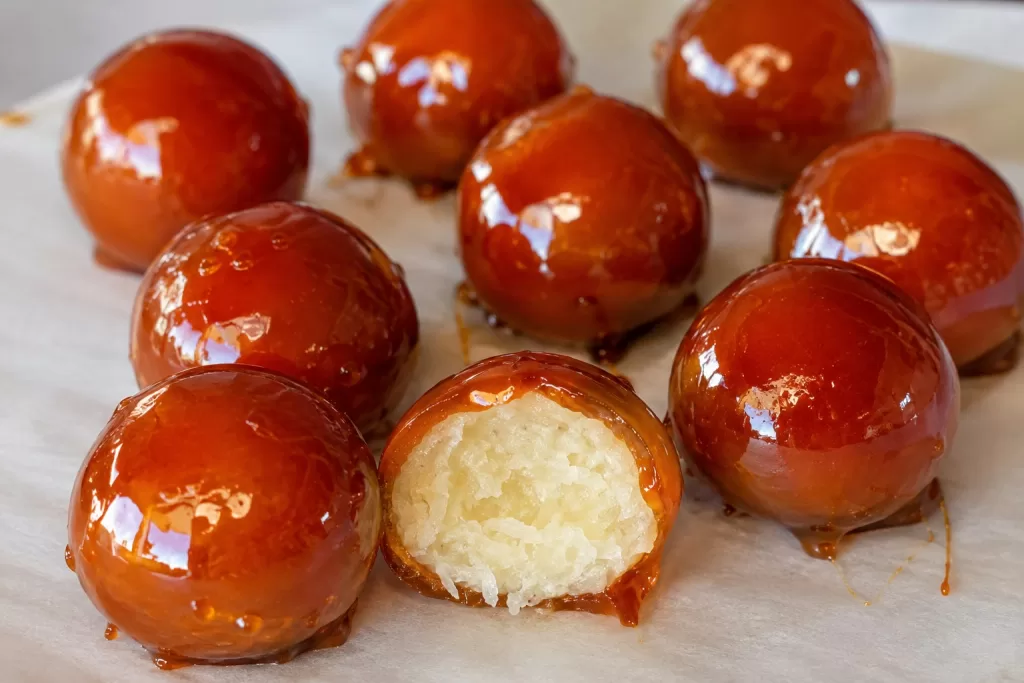
A soft coconut center inside a brittle caramel shell
Bala Baiana is built around two contrasting textures.
The center is made by slowly heating condensed milk, desiccated coconut and butter until the mixture becomes thick enough to hold its shape. After cooling, it is rolled into small balls.
Each ball is then dipped into hot caramel.
Once the sugar cools, it forms a thin, hard shell that cracks when bitten. The glossy coating is one of the main reasons the recipe performs so well in short cooking videos.
The candy looks complicated, but it requires only a few ingredients and relatively little active cooking time. The longest step is waiting for the coconut mixture to chill before shaping and coating it.
Ingredients
For the coconut filling
- 400 g sweetened condensed milk
- 120 to 150 g desiccated coconut
- 20 g butter
- One small pinch of salt, optional
For the caramel coating
- 300 g granulated sugar
- 120 ml water
These quantities produce approximately 18 to 24 candies, depending on how large the coconut balls are shaped.
How to make Bala Baiana
1. Cook the coconut filling
Place the condensed milk, desiccated coconut, butter and salt in a heavy-bottomed saucepan.
Cook over low heat, stirring constantly with a silicone spatula or wooden spoon.
The mixture is ready when it thickens, pulls away from the sides of the pan and briefly exposes the bottom when stirred. This usually takes around 8 to 12 minutes.
Avoid using high heat. Condensed milk can catch and burn quickly.
2. Cool the mixture
Transfer the coconut mixture to a lightly buttered plate or shallow container.
Allow it to cool to room temperature, then refrigerate until firm. Depending on the depth of the container, this can take between 45 minutes and two hours.
The mixture must be cold enough to hold its shape without sticking heavily to the hands.
3. Shape the candies
Lightly butter your hands.
Take small portions of the chilled filling and roll them into smooth balls, approximately 2.5 to 3 centimeters wide.
Place them on a parchment-lined tray and refrigerate for another 20 minutes. Chilling helps prevent the balls from softening when they enter the hot caramel.
4. Prepare the caramel
Place the sugar and water in a clean saucepan.
Heat the mixture without stirring until the sugar dissolves and the syrup begins to turn golden. Swirl the pan gently when needed, but avoid stirring with a spoon once it starts boiling.
Continue cooking until the caramel reaches a deep amber color.
Do not allow it to become very dark, as it may taste bitter.
5. Coat each coconut ball
Insert a wooden skewer or toothpick into one chilled coconut ball.
Carefully dip it into the caramel, turning until the surface is fully covered. Lift it out and allow the excess caramel to drip back into the pan.
Place the coated candy on parchment paper.
Repeat with the remaining balls while the caramel is still fluid. If it becomes too thick, return it briefly to low heat.
6. Allow the shell to harden
Leave the candies at room temperature until the caramel coating becomes completely firm.
Remove the skewers carefully. Small holes can be covered with a drop of warm caramel if presentation matters.
The finished candy should have a crisp, glass-like shell and a soft coconut center.
Why the recipe went viral
The recipe contains several elements that work particularly well on social media.
The candies are visually striking, the glossy shell catches the light, and the moment of biting into one produces a clear cracking sound. The contrast between the brittle exterior and creamy center is immediately visible.
The ingredients are also familiar and easy to find.
Although Bala Baiana is Brazilian, social media users in India compared its round, golden appearance with gulab jamun. The comparison helped the video travel beyond its original audience, even though gulab jamun is fried and soaked in syrup, while Bala Baiana is filled with coconut and coated in hard caramel.
Tips for a thin, crisp caramel shell
Use cold coconut balls. Warm filling can soften or slide when dipped into the caramel.
Do not make the balls too large. Smaller candies are easier to coat and eat.
Let excess caramel drip off before placing each piece on parchment. A thick layer can become difficult to bite.
Work carefully and keep children away from the pan. Melted sugar can cause serious burns and remains extremely hot after it is removed from the stove.
Prepare the candies on a dry day when possible. Humidity can make caramel sticky and cause the shell to soften.
How to store Bala Baiana
Bala Baiana is best eaten on the same day it is coated.
Humidity from the refrigerator can cause the caramel shell to become sticky. Store the candies in a single layer inside an airtight container at cool room temperature.
If the environment is very warm, refrigerate the uncoated coconut balls and prepare the caramel shortly before serving.
The coconut filling can be made one day in advance.
The candy may have become famous because of its appearance, but the texture explains why people keep making it. The first bite breaks through crisp caramel before reaching a soft, rich coconut filling underneath.


